Saturday, September 12, 2009

The Order of Things

Most of us, I think it's fair to say, learned much of what we know about the history of music in a haphazard and largely inefficient way. We listened to the radio when we were 13, and perhaps a D.J. emphasized the importance of the Beatles, the band who'd performed the song we'd just heard. Or perhaps a friend told us that Miles Davis was a monster on the trumpet, and that he'd done some really important work in the 1960s and 70s. Or perhaps, in perusing the liner notes to the used copy of Beethoven's Ninth that we'd just bought for two dollars, we learned that he is generally viewed as a Romantic composer.

We learned, in other words, in bits and pieces, slowly forming a sense of the whole from the many disparate parts. Eventually, perhaps, we took a class in music history, or read a book that outlined the connections between West African music, the blues, and Elvis Presley. And, as we grew older, the music that was produced in our time eventually became a part of music's history, too: anyone older than 35 has at least a sense of the trajectory of Michael Jackson's career, from energetic cherub to a eunuch in the weird court of megacelebrity. But, for the most part, most of us still assembled, I think, our understanding of music's vast past from a patchwork of fortuitous mentions, incidental references, and educated guesses. Schumann? Jelly Roll Morton? Canned Heat? They all fit in there somehow, although their precise place probably differs considerably in most of our mental maps.

I'd always hoped, before becoming a parent, that I might give my children some help in drawing their own chart of the land of music. Wouldn't it be nice, for instance, to give your 10-year-old son a copy of Abbey Road, and then to follow that up a few months later with Exile on Main Street? To explain, during a long car trip, how Mozart borrows from, and departs from, Haydn? I never wanted to be overbearing about it, but hoped simply to offer some basic orientation, to point out some major signposts in the history of the subject.

But. But that was us, Cleo and L. and I, listening to some randomly chosen Venezuelan folk music last night. And then to Chopin's lovely Raindrop Prelude today. And, just as likely, to some Dead Can Dance in the car tomorrow. Who knows if Cleo really registers any of it? If she does, though, she might well be completely confused, as there's no order, no sense, in what I'm playing at the moment. It all fits together, kid, but you're gonna have to figure out how on your own.

Of course there'll be time, in years to come, for more useful conversations about such links and connections. But for now, it strikes me that in fact much of infancy is characterized by more or less random stimuli. Here, Cleo is a mobile. Okay; now here's a plush pig. And now I'm going to place you on your back. And now into the car. Hey, there's Mommy! From our point of view, of course, there's an order to it all; we try to give Cleo toys when she's alert; we try to read her signals, and to put her to bed when she seems tired, and we pick each other up at work. But one could easily argue that there would be more useful, or thoughtful ways of ordering the activities: after Cleo stares at the high-contrast cat card in her playroom, I could carry her over to the real cat in the house.

Maybe so. And maybe radio stations could play tracks in historical order, for a day or two, so that we could view influences in a more direct way. But maybe, just maybe, there's something to be said for a lack of complete order, too. The present is never quite as ordered as it might be, whether we're infants or adults. Maybe the past should thus always seem slightly jumbled, as well.

Thursday, September 10, 2009

Dispersals

The castaway hurls a bottle that holds a note into the sea; the United States outfits a spacecraft with a plaque depicting a man, a woman, and the place of the Earth in the solar system. Just in case, just in case: perhaps what we send away from us will fall into another's arms.

And, amazingly, it often does. Often, of course, the trajectory is intentional, if unlikely: a letter written in Portugal, in 1813, by a soldier embroiled in the Napoleonic Wars, reaches a woman's hands in Haverhill, Massachusetts. But sometimes the course is more haphazard. Marginalia jotted, in jest or in fury, in books decades old sometimes surprise us, and we become their long-awaited audience.

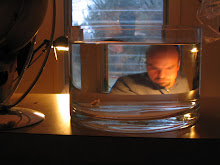
Technologies, of course, can play a lively role in such dispersals. Take the photo, above, as an example: if this were 1972 (or, heck, 2001), I might have snapped the picture, gotten a few hard copies made, and eventually found the time to mail one to Cleo's grandparents, who might have handled it gently, and then put it aside. As it is, though, it glows on your screen, and it may glow on others - and could always be forwarded, and downloaded, and recontextualized. Such ease of transmission, as Erin Andrews now knows, can be vexing, but it's also remarkable: the bottle we throw now floats on millions of seas.

And imagine, for a moment, the surprise that the Baroque composer Georg Philipp Telemann might have felt if he'd learned that Cleo would fall asleep in the car at 4:48 this afternoon as one of his lively, sinuous trio sonatas played on the radio. He wrote, I assume, for a certain limited audience, and given his success his work often seems to have found its mark. But radio waves and automobile speakers make a new and vaster audience possible, too: Telemann's now heard by the ears of infants in a continent barely known to him.

Freud once wrote about the pleasure, for a baby, of the fort-da game: having thrown a wooden reel attached to a string away (fort is German for gone), his grandson enjoyed the reeling back, the da, of the toy. And then threw it away again - learning, in the process, Freud said, a measure of control over the occasional absence of the mother.

Perhaps. But there's also a measure of joy in the hier: in happening to be the one in whose lap the toy falls, when cast. At least I hope there is, reader, I hope there is. This is no ancient letter, no wondrous satellite, but it's sent with the same underlying optimism that somewhere there is a willing audience - and perhaps an audience that differs from what I, or Telemann, could ever imagine.

Monday, September 7, 2009

Music and memory

Time for a literary confession (of a sort opposite that of David Lodge's Humiliation): I couldn't, or didn't, stop at one Sarah Dessen novel. When I found out, last weekend, that the local library had her 2006 book Just Listen in stock, well, that was me thumbing the pages and then following the travails of the ostracized teen model Annabel Greene.

But all in the name of longterm research, folks, I promise! Curious about how a parent should, or should not, handle a teenaged daughter's apparent eating disorder? Wondering how to interest a daughter in college, or in the creative arts? And why, really, are silent, intense boys so damned attractive? It's called Just Listen, and it's at your local library.

For this blogger/parent, however, perhaps the most interesting aspect of the novel was its focus on music. The title's a double entendre: it points to the need for supportive friends and family, but it also refers to the eclectic, open-minded musical interests of Annabel's eventual partner. And, as she grows to learn the Boy Behind the Earbuds, Annabel learns a few things about music, as well. Such as (page 96): "There's the fact that music is a total constant... Because a song can take you back instantly to a moment, or a place, or even a person."

Amen to that. We've all had the experience: you walk into a completely generic space - an office lobby, or a Starbucks, or an elevator - and you hear a melody, and suddenly you're more or less right back where you were when you first heard it. Examples? When I hear Cheap Trick's The Flame, I'm in the Food Lion across I-95, mopping the aisles as we close the store. Guns n' Roses' November Rain will always take me to a grayish coffee bar in Brno, in the Czech Republic, where the owner turned the stereo system up by about 150% when the tune came on. And so on.

Is the link between music and memory, though, entirely personal, and merely anecdotal? Nope; as you might have guessed, there are lab-coated researchers working on the issue at this very moment. And in some cases, interesting findings have already been published. For instance, David Rubin of Duke University found that undergrads could remember only 32 words of the national anthem when asked to write them down without singing. When the instrumental music was played before he made his request, however, they then produced an average of 52 words. Melody can act, he concluded, as a constraint against forgetting.

Which is why, perhaps, it just feels right to sing little ditties to Cleo as we careen along the little dirt road near our house. My ear's made through and through of tin, and my voice simply can't carry a tune, but it tries, it tries, knowing that babies may remember birdies all the better since they sing.

Sunday, September 6, 2009

Us and them

In the dreamy late-summer days before the fall semester began, I spent a few hours in a local Barnes and Noble reading from Sarah Dessen's new novel, Along for the Ride. Dessen, who grew up a few blocks from me and went to my high school, is now a wildly successful novelist whose books are primarily about, and aimed at, teen girls. Not my normal stomping grounds, but, curious to know what Sarah's writing is like, and wondering what the year 2023 might hold for me as a dad, I rather sheepishly strode into the Teen Literature section of the bookstore, and grabbed one of two copies of the handsome hardback.

Pretty soon, I was an 18-year-old girl, moving to the beach to spend the summer before college with my dad and his new wife, and baby girl. Dessen's writing isn't airy, or erudite (indeed, it's often not even polysyllabic: a rather typical sentence, rhythmically, is this one: "When she saw me, she shrieked"). But it's got the frictionless quality of broadly popular prose, and Dessen is clearly able to create a psychological landscape that strikes many readers as compelling. Her book, I wound up thinking, is something like yoga as it's taught in most American gyms: instead of aiming at philosophical complexity, it poses modest challenges in a simplified context, with a vague and unspoken assurance that all will turn out well. There are morals, but they're diffuse; the central thing, Dessen's prose seems to suggest, is that we're in this together.

And, to be honest, I was surprised by the degree to which I was in the book. Auden, the pretty protagonist and narrator, has a mom who's a talented English professor, and her dad was once a talented writer; in Auden's early years, they'd lived in a university town. Hey, I know that basic setting; it's the one that Sarah and I and so many of our classmates grew up in. And the beach, a few hours away? Well, Dessen's readers will all supply their own memories, but for me it was Topsail Island, a modest drive from my hometown.

But here's what really struck me, as I read further. In the novel, Auden's a voice of reason; it's the adults who keep mucking things up. Her mom studies women in literature, but can't enjoy speaking with actual, living women, and she falls into bed with grad students who don't even appeal to her teenaged daughter. And Auden's dad? A failed father, twice, he's more given to stare at his blank computer monitor as he tries to compose his long-overdue second novel than he is to help his second wife with their new infant. And so on: it's easy to see why such a plot might appeal to teen readers. Adults are cast as bumbling and even self-destructive; they're the wildcards in a teen world of relative clarity.

Which, of course, is exactly the opposite of the narrative that adults usually prefer. Don't those of us over, say, 25, imagine that we live relatively ordered and clearly motivated lives, all of which will eventually be thrown into chaos by our ravenous, fashion-hungry, id-driven teens? Sure, there may be a few Alex P. Keatons out there, but I think that adults usually see teens as the inconsistent and self-destructive ones.

So, as usual, the lens matters. Babies probably see us as unpredictable and arbitrary as we bundle them into their car seats, only to remove them 15 minutes later; in the meantime, we wonder at their seemingly wild and unordered motions. On a larger level, Americans love to characterize the French, with their Euro work weeks, as lazy, only to find that the French cast Americans as consumed by their work and unable to enjoy the good things in life. Is there, then, no single truth? Maybe none beyond the conviction that whoever we happen to be is in the right, and whoever they are - well, they could use a little work. Happy Labor Day.

Saturday, September 5, 2009

Developments

Yesterday Cleo hit the 3-month mark: a modest but nevertheless significant benchmark, more or less on the order of Slovakia celebrating its 5th anniversary as an independent republic, or Sammy Khalifa, "the Egyptian Jackie Robinson," getting his hundredth career hit in the majors.

Such anniversaries naturally lead one to step back and to take stock from a certain distance, and -given that many of you are watching her grow from a considerable distance, and may not have met her at all - I thought I'd offer a brief summary of Cleo's current interests and tendencies.

[Note: if you happened for some reason to arrive at this site mistakenly while trying to find Shri Panchapakesan's marital services web page, please note that Cleo is not yet seeking a partner. But we wish you only the best in your search.]

So: like most babies her age, Cleo can now move her head about relatively confidently, and she's able to look across a room. She can't sit up on her own, but she is learning to lift herself towards a sitting position, and likes being supported while seated, and peering about. She's still on a diet of nothing but mother's milk, and while she prefers breastfeeding she also drinks well from her little Dr. Brown's bottles, and so I've enjoyed feeding her if L's at work or, as now, enjoying a rare chance to sleep in. Cleo generally wakes at around 6:30, puts in an hour or two of play before enjoying two morning naps, and is then awake for most of the afternoon, before going to sleep at about 7 p.m. She's sleeping in a crib, in the nursery, and sometimes sleeps through the night, or wakes once, at about 3. She weighs, we think, around 13 pounds, although it's been weeks since we put her on a scale. That's the size of an average bowling ball, or a medium turkey.

Hobbies? Glad you asked. She clearly likes stuffing her fist in her mouth, wriggling suddenly and unpredictably at any moment of the day, tentatively feeling the contours of the plush cow toy that we sometimes dangle before her, and babbling while she watches the butterfly mobile. She generally seems to enjoy her baths, which are almost daily, and, now that I've taken her on more than 50 morning walks in the Baby Bjorn, she often lights up visibly when I begin to strap myself into the sling.

And how would we describe her, as a little person? If limited to three words, I'd go with mellow, patient, and deliberate. She's almost always in a pleasant mood, cries only when tired or hungry, and seems open to a range of activities and positions. She's clearly a touch shy with her hands, as she's only now beginning to feel the world around her, but she seems comfortable with strangers, often greeting them with a smile.

In sum, we're entirely pleased with our recent acquisition, and would fully recommend the same model of baby to other potential consumers.

Thursday, September 3, 2009

Frames

A few years ago, a British team of researchers wanted to investigate the potential effect of music on consumer choices. Working in a grocery store, they set up a tape player in the wine section of a store, directly above a display of four French and four German wines of comparable price. They then played French and German music on alternate days.

The result? When French music was played, the store sold forty bottles of French wine, and only eight bottles of German. Simply a consequence de la haute qualite of French wines? Well, when German music was played, sales of the French wines dropped to 12 bottles, and consumers, their heads full of Rhineland melodies, sprang for 22 bottles of German wine. Our choices may seem to be rational, but they're often governed or affected in large part by framing forces.

Cleo doesn't know the difference between French and German music. In fact, I'm not sure she knows the difference between her left foot and the cat. But I wonder if the same principle - the idea that frames matter - might be applicable in some interesting ways, as she grows older. In a year, when she's eating solid foods, might it help to accompany some of the less popular choices (Brussels sprouts, say) with a favorite book, or jingle? Could a slight parental frown expressed as the car drives by a McDonald's affect our daughter's attitude towards fast food?

Sometimes, of course, people simply prefer certain dietary and gustatory choices - and we're eager to see what choices Cleo makes, as she grows older. (For now, her right fist, stuffed into her mouth, seems to suffice, in most cases). But we're also nervous, in a landscape of processed foods and colorful cartoon spokesanimals. Slowly, uncertainly, we're erecting a tapedeck of our own. But will it work, when we press play? And will it be loud enough, or too loud?

Tuesday, September 1, 2009

Mr. Mom

So yesterday was L's first full day back at work, which meant that it was also my first full day as a child care provider - which meant, in turn, that I now had yet another thing in common with a character played by Michael Keaton (see also: Bruce Wayne's wolfish smile and the deep impact of the 1986 World Series on Nicky Rogan). I was home alone with the little one.

And that was, for the most part, pretty darned nice. On a wonderfully autumnal day, I took Cleo for a walk; we bought a loaf of bread, and peered down at the river. Like a Parisian romance, no? But then there were other pleasures, too: Cleo smiling and wiggling in the bath, and snoring for a good half hour while snoozing like an overfed pasha in my lap in the afternoon. And the potential problems largely failed to materialize; she ate well from the bottle, rode in relative peace when we went to pick up L. at the end of her work day, and she wrote no scathing remarks in a diary, as far as I could tell, about the fact that we dressed her in a silly fuzzy outfit covered with castles.

Sounds easy enough, yes? But even a relatively straightforward day with the baby, it turns out, can be pretty tiring. That's not news to, say, the thousands of single mothers in Brazil who read this blog on a daily basis (Ola, malta! Muito obrigado...), but it did surprise me. I mean, how hard can it be to change a few diapers, twirl the mobile, and jabber away while trying to prepare lunch with one hand?

Well, here's how hard: in a fun little essay on DoubleX, Katie Roiph, the mother of a 6-week-old, noted that "The other day it emerged that I lack the intellectual wherewithal to set a table: It was just a little too challenging to hold the number of people at dinner in my head on the walk from the kitchen to the deck." Surely that's hyperbole, I thought. But then I was the one, at about 2 p.m., taking a big swig of what I thought was water, but was actually the baking powder solution that I'd used to clean Cleo's neck rash. Mmmm good.

But, still, the day rolls by (In fact, as Roiph points out, it rolls by in its own way: one lives like a farmer, attuned to larger patterns, rather than to conventional increments of time. The sun turns; the diapers need changing). And so, at about 6, with L. home after a day at work, it was time for me to earn my keep, and to teach a 3-hour class on art criticism. That's fine; I love the subject, and a packed room of students always comes with a built-in energy that can sustain one. I hadn't reckoned, however, on how odd the transition to the classroom would be. While leading a discussion on description, I was wondering, at the same time, if Cleo was asleep. And ideas that I'd found really engaging in the abstract several months ago (should art critics actively avoid any friendships with artists whom they review? a.k.a the Dore Ashton rule) now felt, well, merely abstract. Such ideas, you know, don't sleep on your lap.

So here's the main idea: in becoming a parent, one obviously changes, and takes on a new role. That's clear to me every time an unfamiliar woman in the grocery store approaches to comment on Cleo's socks. But its full meaning only occurred to me last night: the role of parenthood alters ones other roles, as well. I was one type of teacher before; now, somehow, I'm another - and I don't simply mean a tired and easily distracted one. Rather, one's basic center of gravity, as a person, is altered. And so is one's balance, as a result. It takes time, clearly, to relearn the steps that used to be easy. But it took time to learn to take steps for the first time, as well.